Lean Six Sigma Training Guide
  • IASSC Free Training Guide
  • Free Lean Six Sigma Training Guide
  • ASQ Free Training Guide
  • Body of Knowledge
  • Practice Exams
    • Six Sigma Quick Training Tests >
      • Lean Six Sigma Practice Test 1
      • Lean Six Sigma Practice Test 2
      • Lean Six Sigma Practice Test 3
      • Lean Six Sigma Practice Test 4
      • Lean Six Sigma Practice Test 5
      • Lean Six Sigma Practice Test 6
      • Lean Six Sigma Practice Test 7
      • Lean Six Sigma Practice Test 8
      • Lean Six Sigma Practice Test 9
      • Lean Six Sigma Practice Test 10
      • Lean Six Sigma Practice Test 11
      • Lean Six Sigma Practice Test 12
    • Six Sigma DMAIC Training Tests >
      • DEFINE Six Sigma Training Test
      • MEASURE Six Sigma Training Test
      • ANALYZE Six Sigma Training Test
      • IMPROVE Six Sigma Training Test
      • CONTROL Six Sigma Training Test
    • IASSC, ASQ and Other Exams >
      • IASSC Six Sigma Black Belt Exam
      • IASSC Six Sigma Green Belt Exam
      • IASSC Six Sigma Yellow Belt Exam
      • Lean Six Sigma Exams By Topic >
        • I. Enterprise-Wide Deployment >
          • A. Enterprise-wide view
          • B. Leadership
        • II. Organizational Process Management and Measures >
          • A. Impact on stakeholders
          • B. Critical to x (CTx) requirements
          • C. Benchmarking
          • D. Business performance measures
          • E. Financial measures
        • IV. Define >
          • A. Voice of the customer
          • B. Project charter
          • C. Project tracking
        • V. Measure >
          • D. Basic statistics
      • ASQ Six Sigma Black Belt Exam
      • ASQ Six Sigma Green Belt Exam
  • Six Sigma Materials
    • The Problem Solving Strategy Y = f(x) in Lean Six Sigma
    • Value Stream Mapping Explained
    • Pareto Analysis And Pareto Chart Explained
    • Best 5 Free Online Degree Programs In 2017
    • Cost Of Poor Quality (COPQ) Explained
    • Best 4 Free Online Certifications To Boost Your Resume
    • Pareto Analysis and Pareto Chart
    • Why Six Sigma Certification?
    • Six Sigma Green Belt Training
    • General History of Six Sigma & Continuous Improvement
    • Walter Shewhart Biography
    • Basic Lean Six Sigma Metrics
    • How to Make a Histogram
    • Statistical Process Control Charts
    • Lean Six Sigma Term Glossary
    • Kaizen and Kaizen Blitz
    • Central Limit Theorem
    • Six Sigma Symbols
    • Six Sigma Tables >
      • Z Score Tables
      • T Distribution Table
      • Chi-Square Distribution Table
      • F Distribution Table
      • Poisson Distribution Table
      • Cumulative Poisson Distribution Table
    • Six Sigma Diagrams >
      • Choosing a Right Parametric Test
      • Choosing a Right Control Chart
      • Commonly Used Lean Six Sigma Flowchart Symbols
      • Ishikawa (Fishbone) Diagram
      • Histogram
      • Scatterplot
      • Check Sheet
      • Failure Mode and Effects Analysis (FMEA)
    • Lean Six Sigma Belt Roles and Responsibilities
    • 5S
    • How to get six sigma certified?
    • International Six Sigma Certification Association (IASSC) Exam Reference Document
    • Useful Websites and Tools
    • 10 Best Free Udemy Courses That You Can Take Online
    • 5 Best Udemy Courses You Can Take Today
    • The Complete Web Developer Course 2.0 You Can Take Online | Udemy
    • 12 Best Probability and Statistics Online Courses and Classes [2018 Guide]
    • 15 Best Data Science Degrees, Courses and Certifications [2018]
  • Six Sigma Glossary
    • 5 Whys
    • Analytical and Descriptive Statistics
    • Brainstorming
    • Cost Of Quality
    • Design for Six Sigma (DFSS)
    • Efficiency of Estimators
    • Process Maps and Flow Charts
    • Gap Analysis
    • Common & Special Cause Variation
    • Quality Function Deployment (QFD)
    • In Control Process
    • Interest-Based Bargaining
    • Internal Customer
    • ISO9000
    • Kaizen Blitz
    • Kanban
    • Kano Model
    • Key Performance Indicators (KPI)
    • Lean Production
    • Management Strategies
    • MANOVA
    • Multivariate Analysis
    • Pareto Charts
    • Pareto Principle
    • PEST Analysis
    • Porter's Five Forces Analysis
    • Factor Analysis
    • Procedures
    • Process
    • Project Charter
    • Project Sponsor
    • Pull Production System
    • QS9000
    • Random Sampling
    • Failure Mode & Effects Analysis (FMEA)
    • Rolled Throughput Yield
    • Root Cause Analysis
    • Scenario Planning
    • Seven Quality Tools
    • SIPOC Diagrams
    • Six Sigma
    • SWOT Analysis
    • Systematic Sampling
    • System (Quality System)
    • Team Tools
    • Theory of Constraints
    • Throughput
    • Total Productive Maintenance (TPM)
    • Touch Time
    • Value Stream Maps
    • Visual Factory
    • Work In Progress (WIP)
    • Work In Queue
    • Work Instructions
    • Big Y
    • Control Plan
    • Waste
    • Evolutionary Operation of Processes (EVOP)
    • Cause & Effect Diagrams
    • 5C
    • 5Z
    • Project Selection
    • 8D Process
    • Appraisal Cost
    • Audit
    • Baseline
    • Business Process Quality Management
    • Check Sheet
    • Unintended Consequences
    • Voice Of The Customer (VOC)
    • Critical to Customer (CTC)
    • Critical To Quality (CTQ)
    • Customer Focus
    • Efficiency
    • Empowerment
    • Entry Criteria
    • Exit Criteria
    • Voice Of The Process (VOP)
    • Just In Time (JIT) Manufacturing
    • KISS
    • DMAIC
  • Six Sigma Blog
  • Forum
  • About Me
  • Privacy Policy
  • Contact
  • Top Free Online Courses With Printable Certificates
  • Roman Numerals Chart

Six Sigma Logo and Symbol

Tweet
Home/Body of Knowledge/Six Sigma Logo and Symbol
Previous: Control planAll topics

The Six Sigma symbol is the number 6 written with the lowercase Greek letter sigma (σ). Sigma is the usual symbol for a population standard deviation — a measure of spread. “Six Sigma” is a quality goal: keep the process so tight, and so well centered, that even several standard deviations of variation still fall inside the specification.

This page explains that idea, then keeps the logo gallery and the other statistical symbols already used on the site.

Normal curve showing standard deviations around the mean relative to specification limits A bell curve centered on mu. Tick marks show plus and minus one, two, and three sigma. Vertical specification lines sit farther out, near plus and minus six sigma, to illustrate a process with plenty of room inside the spec. σ measures spread · 6σ is a capability goal μ (mean) −1σ +1σ −2σ +2σ −3σ +3σ LSL USL A “Six Sigma” process places the nearest spec many standard deviations from the mean — far more room than a typical ±3σ habit.
The symbol is not a logo first. It is a statement about variation: σ is spread, and six is an ambitious number of those spreads inside the specification.

What 6 and σ are saying

In statistics, σ (sigma) is the population standard deviation. s or SD is often used for a sample. μ (mu) is the population mean, x̄ (x-bar) is a sample mean, and N is population size. Those symbols appear in the gallery below because they show up constantly in control charts, capability studies, and exam items.

A process at a “Six Sigma” quality level is one whose width and centering leave about six standard deviations between the mean and the nearest specification limit (before any convention about a mean shift). Two numbers get quoted, and they are not the same:

  • If a normal process is perfectly centered and the specs sit at ±6σ, the long-run defect rate is a few parts per billion.
  • The well-known 3.4 defects per million opportunities figure comes from a common Six Sigma convention that allows a 1.5σ shift of the mean over time. With that shift, the remaining distance to the spec is 4.5σ, which corresponds to about 3.4 DPMO. When an exam or a vendor mentions 3.4 DPMO, they are using that convention — not the zero-shift math.

None of this replaces a capability study. Symbols do not make a process capable; data and a stable process do. For process behavior over time, start with statistical process control charts and the core metrics.

Logos versus statistical symbols

The “6σ” mark used on belts, slides, and certificates is a brand-style emblem. There is no single official logo that every company must use. The gallery on this page shows color variants people have used, plus the DMAIC wheel, which is a method symbol rather than a statistical one. For mapping symbols used on process maps — terminators, decisions, inventory triangles — use commonly used Lean Six Sigma flowchart symbols.

Exam notes

You should be able to identify σ as standard deviation, μ as the mean, x̄ as a sample mean, and N as population size, and to explain what “Six Sigma quality” is aiming at. If a question cites 3.4 DPMO, look for the 1.5σ shift convention. If it asks about a centered normal process at ±6σ with no shift, the defect rate is much lower than 3.4 per million.

The original logo gallery and the other symbols follow. See also flowchart symbols, SPC charts, and the Body of Knowledge.

Lean Six Sigma Symbol

six sigma symbol
Six sigma symbol is a combination of the number 6 and the lower-case Greek letter σ which stands for standard deviation in statistics.This is a symbol of a quality improvement methodology which uses a variety of management tools (diagrams) and statistical analysis methods to remove defect causing variation from manufacturing and service delivery processes leading to increased customer satisfaction and profitability. 

Six Sigma Symbol Gallery

Find various six sigma logos in this gallery ranging from green to multi color combinations.
six sigma symbol black and blue
white green black six sigma emblem
6 sigma purple logo
black and red 6 sigma symbol
DMAIC symbol of lean six sigma
six sigma logo in a blue circle

Other Six Sigma Symbols

There are other symbols which are frequently used throughout lean six sigma projects. It is important to be familiar with these symbols not only for six sigma certification candidates pursuing self guided six sigma training but also for long time practitioners

greek letter sigma standard deviation

Lower case Greek letter Sigma denotes standard deviation in statistics. S and SD letters are also used to denote this measure of data dispersion
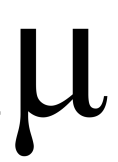
Mu population mean six sigma symbol


Lower case Mu is used to denote population mean
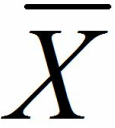
xbar six sigma symbol


Xbar is used to denote a sample mean

See also:
  • Choosing a Right Parametric Test
  • Choosing a Right Control Chart
  • Z Table
  • T Distribution Table
  • Pareto Chart and Analysis
  • About Six Sigma Certification
N population size statistics


In six sigma statistics upper case Latin letter N refers to population size

Other Six Sigma Symbols


In six sigma statistics lower case Latin letter n refers to sample size

See also: Flowchart symbols · Six Sigma diagrams

Related guides

  • Attribute MSA (agreement analysis)
  • ANOVA and non-parametric tests
  • Correlation and regression
  • Normality and data transformation
  • Sample size and sampling
  • Statistical distributions
  • ASQ free training guide
  • Free Lean Six Sigma training guide
Previous: Control planAll topics

Last updated: November 11, 2026 · Published by Lean Six Sigma Training Guide (sixsigmatrainingfree.com) · How this guide is written